Why Should I Invest?

If you have money sitting in a savings account right now, you might feel like you’re doing the responsible thing. And in some ways, you are. But there’s something your bank isn’t keen to advertise: over time, a savings account alone is almost certainly making you poorer in real terms.
That’s not doom-mongering. It’s just how money works, and once you understand it, the case for investing becomes fairly obvious.
The Problem With Just Saving

Let’s say inflation runs at 3% a year, which is roughly the UK’s long-term average. If your savings account pays you 2% interest, you’re technically earning money. But your purchasing power, what your money can actually buy, is shrinking by 1% every year.
| A simple example You have £10,000 in a savings account earning 2% interest. After one year you have £10,200. But if inflation was 3%, the things that cost £10,000 last year now cost £10,300. You’re £100 behind. Do that for 20 years and the gap is enormous. |
This is called losing money in real terms, and it happens silently. Your balance goes up, but your actual wealth goes down. Savings accounts have their place, and we’ll talk about that, but they were never designed to build wealth over decades.
So What Does Investing Actually Do?
Investing means putting your money to work in assets, typically shares of companies, bonds, or funds that hold a mixture of both, that have the potential to grow in value over time and often pay you an income along the way.
When you invest in a broad index fund that tracks the stock market, you’re effectively becoming a small part-owner of hundreds or thousands of companies. When those companies grow and generate profit, so does your investment.
Historically, the global stock market has returned around 7–10% per year on average over the long term, after inflation. That’s not every year, some years it goes up, some years it goes down, but averaged out over decades, that’s the trajectory.
Compare that to a savings account returning 2–4%, and you start to see why investing matters.
But Isn’t It Risky?
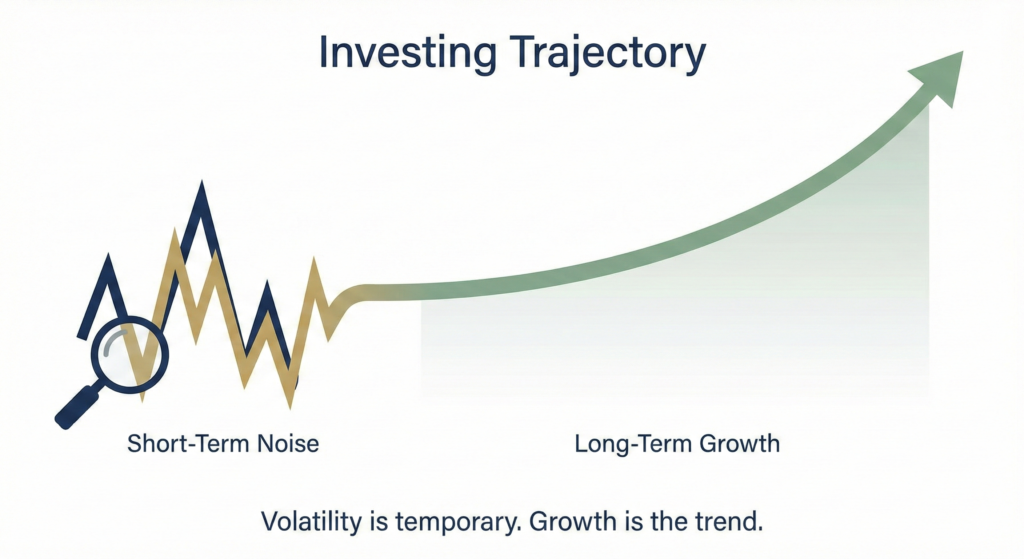
Yes, investing involves risk. The value of your investments can fall as well as rise, and there are no guarantees. If you invest £10,000 today, there will almost certainly be a point where it shows as £8,500 on your screen. That’s uncomfortable, and it’s real.
But here’s what most people miss: the biggest risk for a long-term investor isn’t the market falling. It’s not being invested at all.
| Risk works both ways Every year you keep money in cash instead of investing it, you’re guaranteed to lose purchasing power to inflation. That’s a certain, slow loss. Investing carries short-term uncertainty but offers the strong probability of long-term growth. For money you won’t need for 5+ years, the maths consistently favours investing. |
The key word there is long-term. Investing is not a scheme to get rich quickly. It’s a slow, boring, remarkably effective way to build wealth over years and decades. The people who do best are usually the ones who invest consistently, don’t panic when markets fall, and leave their money alone to grow.
What About Emergencies?
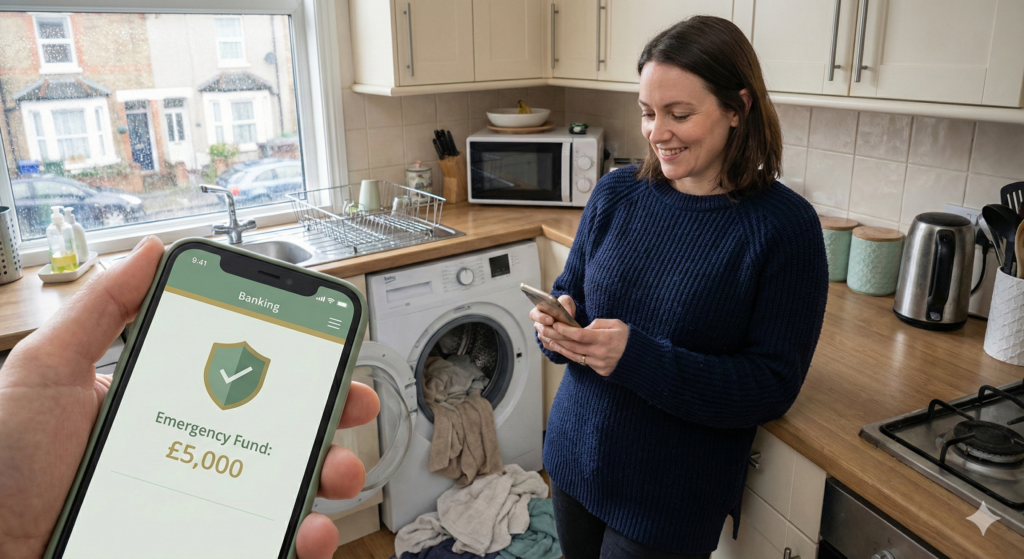
Before you invest anything, you should have an emergency fund, typically 3 to 6 months of essential outgoings, kept in an easy-access savings account. This is your financial safety net. It means that if your boiler breaks, you lose your job, or the car needs replacing, you don’t have to sell your investments at exactly the wrong time.
Investing and saving serve different purposes. Savings protect you in the short term. Investing builds your future. You need both.
Who Is Investing For?

Here’s a question worth asking honestly: who do you think invests?
If you pictured someone wealthy, with a portfolio managed by a private bank in Mayfair, you’re not alone, but you’re wrong. The most effective investors in the world are often ordinary people who started with small amounts, invested consistently into simple index funds, and left it alone for 20 or 30 years.
You don’t need to be rich to invest. You don’t need to understand financial markets. You don’t need to pick stocks or watch the news obsessively. The most straightforward investing strategy, putting money into a low-cost index fund every month, requires almost none of that.
When Should I Start?
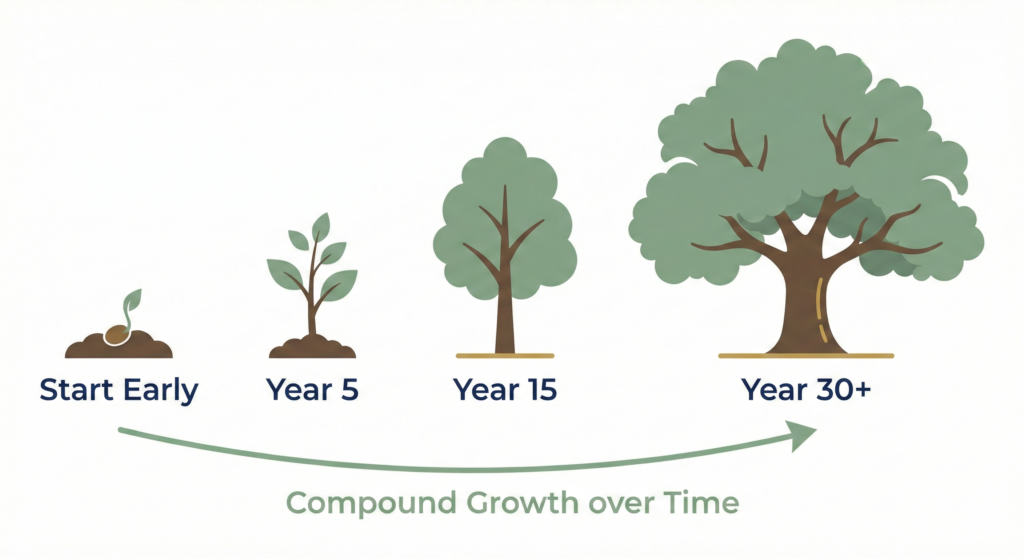
The best time to start investing was ten years ago. The second best time is now. This isn’t a motivational poster, it’s how compound interest works. The earlier you start, the more time your money has to grow on top of itself. Every year you wait is a year of potential growth you can’t get back.
You don’t need a lot of money to begin. Some platforms let you start with as little as £1. What matters far more than how much you start with is that you start.
| Not financial advice Everything on this site is for educational purposes only. We explain how investing works, we don’t tell you what to do with your money. Your circumstances are unique. If you’re unsure about making financial decisions, consider speaking to a qualified financial adviser. |
What Next?
If you want to understand the mechanics of why investing grows money over time, read our page on how compound interest works. If you want to see just how much difference starting early makes, the cost of waiting will make it very concrete.
Or if you’re ready to skip to the practical bit, your first steps walks you through exactly what to do.