Priya’s Story
How a 41 year old in Leeds finally made a will and lasting power of attorney after putting it off for years, and what prompted her to act.
Priya and Dan are fictional characters created for illustrative purposes. Their situation, decisions, and outcomes are designed to show how a couple might approach making a will and lasting power of attorney for the first time. This is not legal or financial advice. Your circumstances will be different. Always consult a qualified solicitor for guidance specific to your situation.
The People
Priya is 41 and works as a practice manager at a GP surgery in Leeds. Her husband Dan is 43 and works in logistics management. They have been together for fifteen years, married for eleven, and have a nine year old daughter. They own their home with around eight years left on the mortgage.
By most practical measures they are well organised people. Priya manages a busy medical practice. Dan runs a regional distribution operation. Both are used to dealing with complexity at work.
Their personal paperwork was a different matter. They had no will. They had never made a lasting power of attorney. They had talked about both, more than once, and each time life had found a way of moving the conversation on before anything was done.
The Moment It Changed

Priya’s father passed away unexpectedly in the spring. He had not made a will.
What followed was months of stress for her mother that could have been avoided. The intestacy rules meant the estate was distributed according to a legal formula rather than her father’s wishes. Some of what he would have wanted to happen did not happen. Some of what he would not have wanted did. The process took far longer and cost more than it needed to.
Priya watched her mother navigate it and made a decision. She was not going to leave that situation for her own family.
Within a fortnight she had started the process of getting a will and lasting power of attorney in place for both her and Dan.
What They Knew at the Start
Priya had a general sense of what a will was. She knew it set out who received your assets when you died. She did not know the detail of what happened without one, what intestacy rules actually meant in practice, or how the rules differed between England and Wales and Scotland.
She had never heard of a lasting power of attorney before her father’s death. Watching her family try to manage her father’s affairs without one in place gave her a very clear education in what it meant to not have one.
Dan knew slightly less than Priya on both topics. He had assumed their assets would pass to each other automatically as a married couple. That was partly true but not the complete picture, and the parts it did not cover were exactly the parts that mattered.
What They Wanted to Achieve
Priya’s goals were clear from the start. She wanted a valid will in place for both of them, covering who received their assets, who would look after their daughter if something happened to both of them, and what their wishes were around specific possessions and charitable gifts.
She also wanted lasting powers of attorney in place for both of them covering both financial affairs and health and welfare. She had seen what happened without them and had no intention of leaving her family in the same position.
She wanted everything done properly, through a solicitor rather than a DIY service, given the complexity of making sure their daughter’s guardianship was correctly specified and that their wishes were unambiguous.
The Questions They Had to Answer
What would happen to their estate without a will?
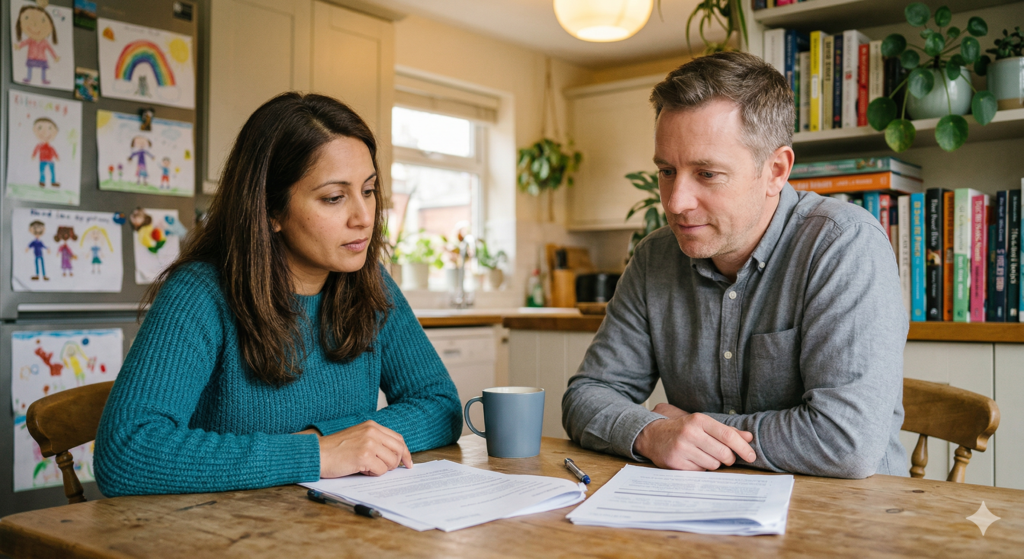
Priya read the wills and LPA guide on this site and understood the intestacy rules for the first time. As a married couple in England, if one of them died the surviving spouse would receive the first £322,000 of the estate plus half of anything above that. Their daughter would receive the other half.
On the surface that sounded reasonable. But the family home was worth more than £322,000 and had significant equity in it. Without a will there was a risk that their daughter could technically have a claim on a share of the property while the surviving parent was still living in it, creating a complicated situation neither of them had considered.
A will would allow them to specify exactly what they wanted to happen, including leaving everything to the surviving spouse first and only passing assets to their daughter on the second death.
Who would look after their daughter?
This was the question that had always felt too difficult to think about, which was partly why they had kept putting the will off. Naming a guardian for their daughter meant confronting a scenario neither of them wanted to consider.
They worked through it together. They identified two couples within their family who they would trust, discussed it with both, and named one as primary guardian and one as backup. Having the conversation was harder than the paperwork.
What did they need an LPA for?
Priya understood the value of an LPA more clearly than most people because of what she had seen with her father. Without a registered power of attorney, if either of them lost capacity, the other would have no automatic legal authority to manage their financial accounts, investments, or pension.
They decided to put both types of LPA in place for both of them. Property and Financial Affairs covering their bank accounts, mortgage, and investments. Health and Welfare covering medical decisions.
Should they use a solicitor or a DIY service?
Given the guardianship question and the complexity of making sure their wishes around the property were clear, they decided to use a solicitor. Priya asked for a recommendation from a colleague and found a local solicitor in Leeds who specialised in wills and estate planning.
They booked an initial appointment for both of them together.
What They Did
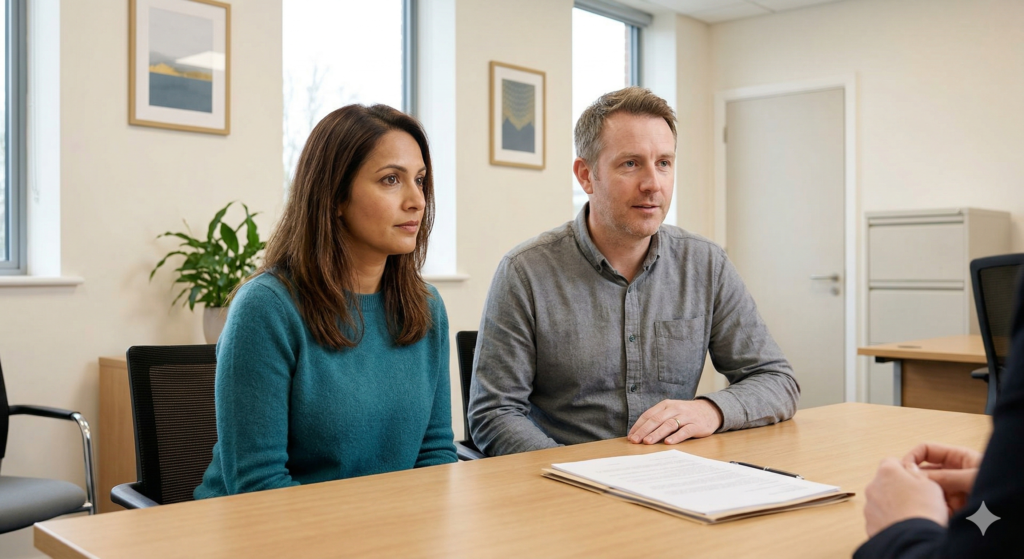
The solicitor appointment took around ninety minutes. The solicitor asked questions Priya and Dan had not thought to ask themselves, including what should happen if their daughter died before them, whether they wanted to include a trust to protect assets until their daughter reached a certain age, and how they wanted to handle digital assets.
They left with a clear brief for two mirror wills and four lasting powers of attorney, two each.
The wills were ready to sign within two weeks. They signed them in the solicitor’s office with two witnesses present.
The LPAs took longer because they needed to be registered with the Office of the Public Guardian. The solicitor handled the registration process on their behalf. The full registration took around sixteen weeks from submission.
While they were waiting for the LPAs to register Priya also checked their pension nomination forms for the first time. Neither of them had updated their expressions of wishes since changing jobs several years earlier. They both updated them, naming each other as primary beneficiary and their daughter as secondary.
The Outcome

Priya and Dan now have valid wills in place that reflect exactly what they want to happen. Their daughter’s guardianship is specified. The property situation is clear. Their charitable wishes are documented.
Their LPAs are registered and in place. If either of them lost capacity tomorrow the other would have the legal authority to manage their affairs without needing to go to court.
Their pension nominations are current.
The total cost was around £1,200 for both wills and all four LPAs through the solicitor, plus the Office of the Public Guardian registration fees. It took around four months from the first appointment to everything being in place.
Priya found the process much less difficult than she had anticipated. The conversation about guardianship was hard. Everything else was straightforward. The solicitor asked the right questions and guided them through decisions they would not have known to make on their own.
What They Learned
The intestacy rules were not what Dan had assumed. Married couples do not automatically inherit everything from each other in all circumstances. Understanding the detail made clear why a will was necessary rather than optional.
The guardian conversation needed to happen before they could make the will. Putting off the will had partly been about avoiding that conversation. Making the appointment forced them to have it, and having it turned out to be far less difficult than the years of avoidance had suggested.
The LPA needed to be in place before it was needed. Priya had watched her family try to manage without one. The registration process takes months. Starting it when everything is fine is the only sensible time.
Checking the pension nominations was something they would not have thought to do without going through the will process. It took twenty minutes and was long overdue.
The total cost felt significant in the moment. Against the cost, in time, money, and stress, of not having these documents in place, it was not significant at all.
Guides That Helped Priya and Dan
These are the pages on this site that cover the topics they worked through:
What’s Next
Priya and Dan’s story covers getting the legal foundations in place. The final example in this section follows a parent thinking about their child’s financial future, opening a Junior ISA and starting to invest for the long term.
Priya and Dan are fictional characters. Their story is for illustrative purposes only. The decisions they made were based on their individual circumstances and do not constitute legal or financial advice. Your situation will be different. Always consult a qualified solicitor for guidance on wills and powers of attorney specific to your situation.